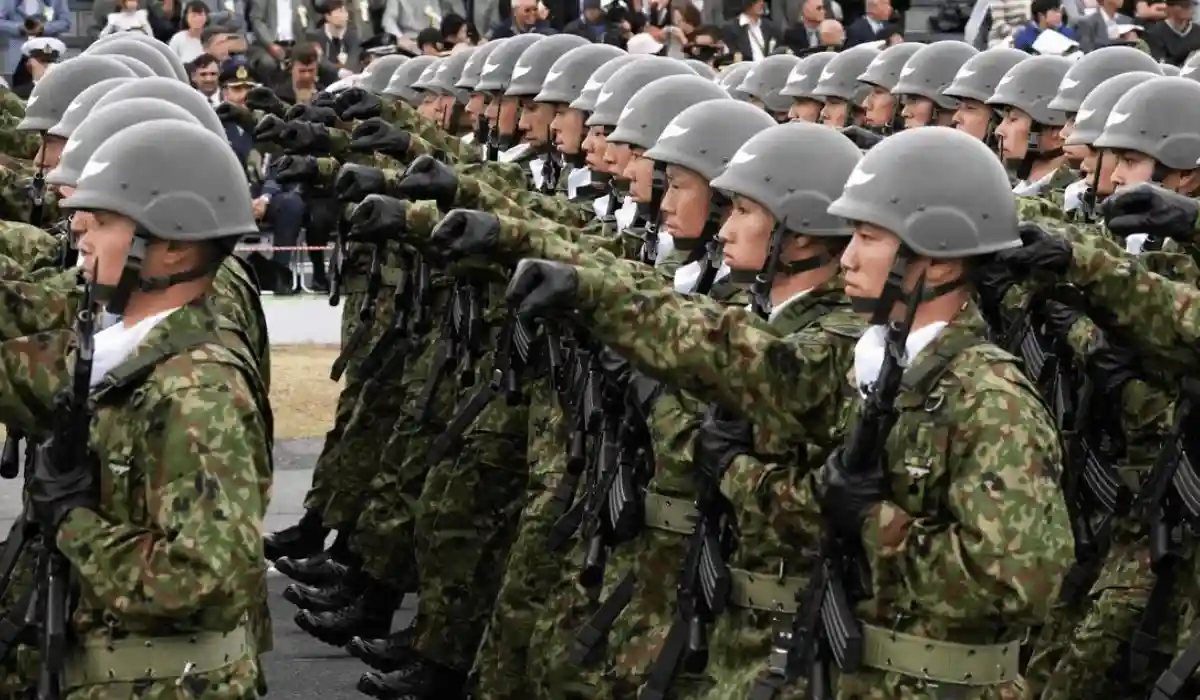
Japan is pushing its defence spending into uncharted territory. The cabinet has signed off on a record budget for the next financial year, crossing the ¥9 trillion mark, roughly $58 billion, and that is nearly a 10 percent jump from last year. It is another big step in Tokyo’s five year plan to double military spending and bring it closer to 2 percent of GDP.
Most of the money is going into strengthening what officials describe as defensive muscle. That includes better coastal protection, more advanced missiles that can hit targets at sea, and new strike back capabilities that would allow Japan to respond quickly if threatened. A major focus is technology, especially unmanned systems meant to patrol and protect Japan’s long coastline.
One of the headline projects is a large scale drone rollout under a programme called Shield. By 2028, Japan wants unmanned aircraft and sea drones operating together to boost surveillance and response capabilities. Around ¥100 billion has been set aside just for these systems, showing how central they are to the new strategy.
All of this is happening against the backdrop of rising friction with China. Beijing has been vocal in its opposition to Japan’s military buildup, especially after comments from Prime Minister Sanae Takaichi suggesting Japan could get involved if China were to attack Taiwan. Those remarks sparked a sharp reaction from China, followed by diplomatic and economic pushback. Takaichi has not walked them back, insisting that Japan’s security stance remains firm.
China’s criticism has not stopped at missiles and troops. Japanese space activity has also drawn attention, with Chinese officials accusing Tokyo of speeding up the militarisation of space. Japan has launched several rockets this year, some in cooperation with the United States, carrying satellites used for navigation and intelligence. Beijing argues these launches are part of a worrying trend.
China’s defence ministry has gone as far as comparing Japan’s current direction to the build up that preceded Pearl Harbor, a comparison that has only added fuel to the fire. The argument is made even more sensitive by Japan’s post war pacifist constitution, which limits military action, although a 2015 change opened the door to collective self defence.
Behind the heated words is a deeper strategic rivalry. Japan now openly sees China as its biggest long term challenge, largely because of Beijing’s growing pressure on Taiwan. China considers the island a breakaway province, while the United States continues to support Taiwan militarily, despite repeated warnings from Beijing.
Tensions have also played out in the air. Tokyo has lodged protests after Chinese military aircraft reportedly locked radar onto Japanese planes during training exercises near southwestern Japan. Incidents like these have made the regional mood even more brittle.
China, for its part, says its military expansion is reasonable and lawful, and shifts much of the blame onto Washington. Beijing accuses the United States of encouraging separatist sentiment in Taiwan and destabilising the region through its alliances.
For now, Japan shows no sign of slowing down. With a record defence budget in place and ambitious plans already underway, Tokyo appears set on reshaping its military posture, even as relations with China grow more strained by the month.