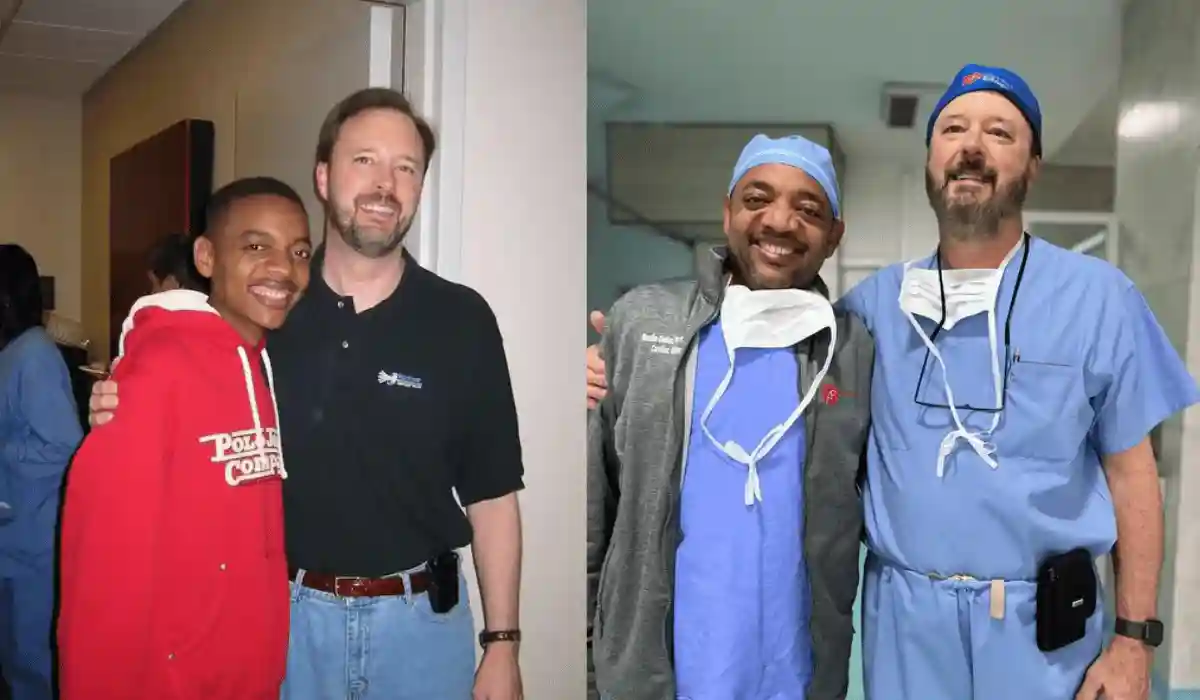
This story is not about two men random men who work as colleagues. It is about two men who first met as doctor and patient 41 years ago in a small Ethiopian village and now work together as colleagues. This remarkable story of Jim Kauten and Mesfin Yana, documented by The Washington Post, shows the incredible things that can happen when people care enough to help someone in need.
Mesfin Yana comes from a small Ethiopian village with very limited access to electricity and water. However, his medical condition began to worsen once he was diagnosed with rheumatic fever, a serious illness. Thin and struggling, the young boy made his way to Mother Teresa’s Missionaries of Charity in Addis Ababa, the capital of Ethiopia, where he met American doctor Rick Hodes.
The Post reports that Dr. Rick Hodes has saved thousands of children with heart disease through his own generous donations and smart fundraising efforts to pay for surgery for the poorest patients.
A charity organization called Children Cross Connection International paid for Mesfin to fly to Atlanta for open-heart surgery at Piedmont Heart Institute. Where he met Dr. Jim Kauten, who successfully repaired the boy’s mitral valve to improve how his heart worked. The doctor recommended that Mesfin stay with a host family nearby while he recovered.
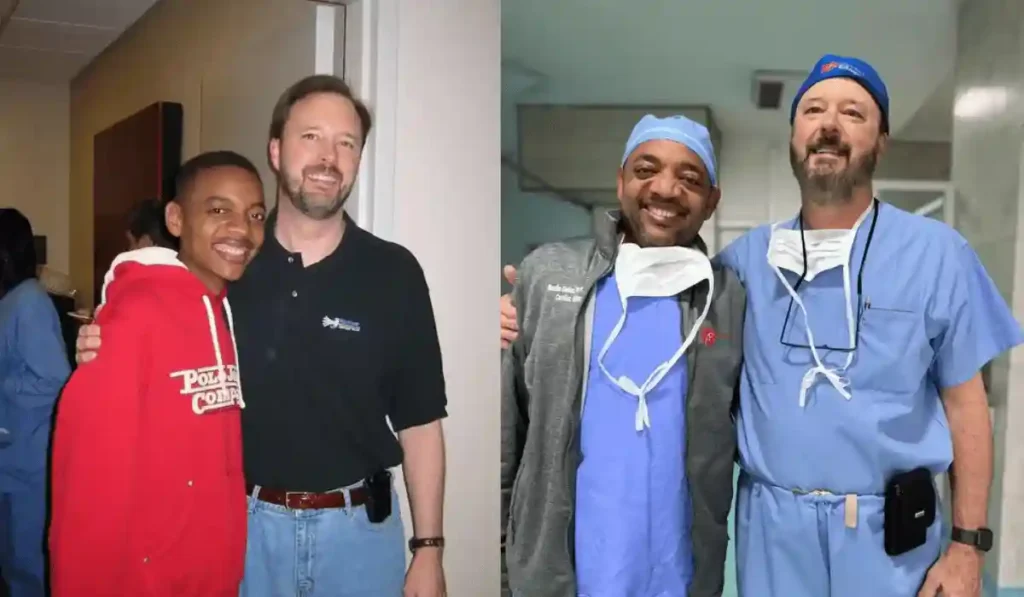
His host family happened to include a dentist. Since Mesfin would soon be heading back to Ethiopia, the dentist suggested he take advantage of being in the US and get his wisdom teeth removed. After Mesfin returned home to his overjoyed family, this dental procedure actually led to another heart problem called endocarditis. Mesfin believed this new condition would surely kill him, even as he once again found himself on Dr. Hodes’ examination table in Addis Ababa.
Both Mesfin and Dr. Hodes are Christian men. Mesfin was willing to accept his bad luck as God’s will, but Dr. Hodes was not. The American doctor sent his patient back to Atlanta for a second surgery. However, it’s unclear who paid for this operation.
This time, doctors discovered that simply repairing the valve wasn’t enough. It needed to be replaced with a mechanical valve, which meant Mesfin would have to live in the United States, where he could easily get the blood thinners and regular medical monitoring he would need.
It was at this point that Mesfin encountered another remarkably kind stranger: Allen Dollar. This cardiologist, who had already adopted many children, welcomed Mesfin into his home as well.
“I’m always grateful,” Mesfin told the Post. “I’m grateful for my family, for just being in the United States. It’s a resurrection for me. You know, I was once lost, dead, and I was resurrected and I’m living a new life.”
With this new chance at life, Mesfin Dollar (he took his adoptive father’s last name) worked hard in his studies, training to become a healthcare professional at Georgia State University. There he met his wife Lyerusalem, and together they have two children.
Mesfin eventually moved his family to Texas, where he trained to become a perfusionist at the Texas Heart Institute. A perfusionist is someone who operates the heart-lung machine during open-heart surgery. He later got a job at the prestigious Mayo Clinic in Minnesota, where he now operates this crucial machine during some of the most complicated heart surgeries.
Given his background, it’s not surprising that Mesfin made time to return to Ethiopia to perform surgeries through a nonprofit organization called Heart Attack Ethiopia. On the first surgery mission trip a couple of years ago, Mesfin surprised Dr. Jim Kauten, the surgeon who had operated on him years earlier and who was also volunteering there.
“That was especially nice in my mind,” Kauten said. “For him to be able to pay back to his community services that he received in the United States, and he was able to pay it back in Ethiopia.”
Beyond his technical skills in the operating room, Mesfin plays another important role. As a native Amharic speaker (Ethiopia’s main language), he acts as a bridge between volunteer surgeons and patients, children just like he once was, unable to understand or communicate with their foreign doctors. His translations help calm the patients and bring both sides of the volunteer team together.