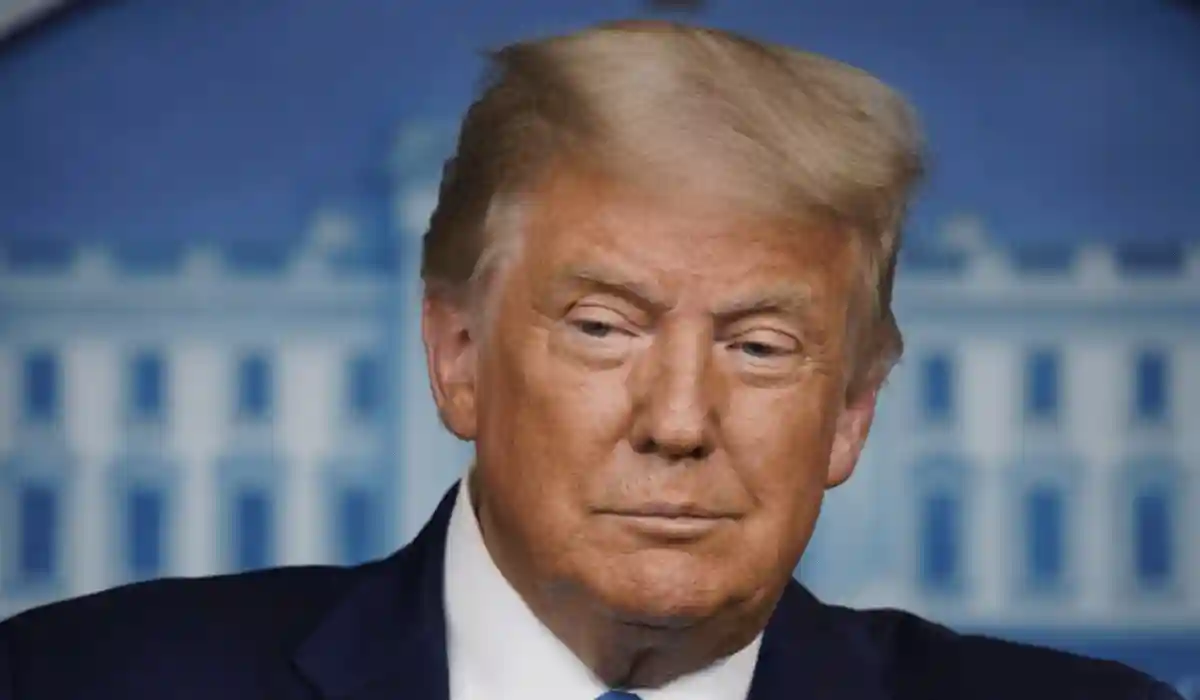
US President Donald Trump on Monday (March 16) said that the United States did not target Iran over oil interests, emphasizing instead that Washington’s focus is on maintaining security in the Strait of Hormuz for the benefit of other nations. Addressing a press conference, Trump stated that many countries depend heavily on the passage for their energy supplies, and the US is acting to ensure their access remains uninterrupted. His remarks come after he reached out to allies and other nations to support efforts to safeguard the critical maritime route.
“We don’t need oil. We have all the oil we need for ourselves. Its one of the great asset that we have. We have doubled, more than double, what anybody else, in terms of oil production than any other country…so we don’t need it. But, we did it because we have some good allies there…you can almost say we didn’t, it happened. We have some great Middle Eastern countries there, Israel there, so we did it for a lot of reason but it always remains there that we did it. We never asked for reimbursement and we were really there to save other countries, not us.”
Speaking further about the Strait of Hormuz, Trump pointed out that several major economies benefit directly from US involvement, as they rely on energy shipments passing through the route. “China should be thanking us. Japan should be thanking us. South Korea as well. All these countries get 90 per cent of their energy through the Straits,” he said, while also voicing frustration with allies—particularly NATO members—for what he described as a lack of support. “Problem with NATO is we are always there for them, but they are never there for you,” he added.
At one point, a visibly agitated Trump, holding a model of a Northrop Grumman B-2 Spirit bomber, asserted that the United States does not “need anybody” to assist in reopening the Strait of Hormuz. Ahead of a Kennedy Center board meeting later that day, he mentioned that “numerous countries have told me they’re on the way” to help secure the passage, though he declined to name them, saying Secretary of State Marco Rubio would provide details.
Trump had earlier urged multiple countries, including China, Japan, and South Korea, to deploy naval forces to help protect the Strait of Hormuz, one of the world’s most critical chokepoints for oil and energy transit. However, none of these nations has publicly committed to sending warships so far.
Japan’s Prime Minister Sanae Takaichi told Parliament that she has not “made any decisions whatsoever about dispatching escort ships. We are continuing to examine…what can be done within the legal framework.” Australia’s transport minister also confirmed that the country would not be deploying naval assets to the region. Germany’s Foreign Minister Johann Wadephul said he does not see a role for NATO in the situation, while the European Union’s foreign policy chief Kaja Kallas stated that “for the time being, there was no appetite in changing the mandate of the operation.”
In a separate press briefing on Monday, British Prime Minister Keir Starmer said the UK would not be drawn into a “wider war.” Meanwhile, Trump told The Financial Times on Sunday that it would be “very bad for the future of NATO” if allies ultimately declined to support the US in this effort.