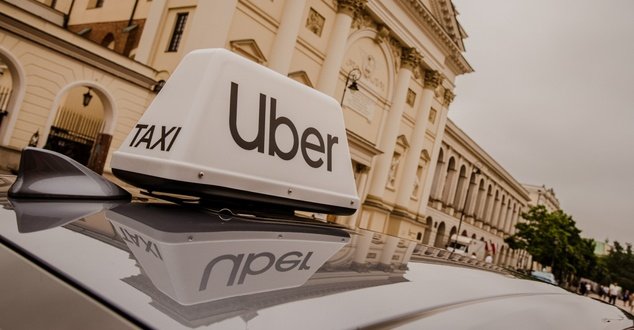
Uber Technologies has announced plans to invest up to $1.25 billion in electric vehicle manufacturer Rivian Automotive as part of a partnership to roll out as many as 50,000 robotaxis globally by 2031.
Under the agreement, Uber or its fleet partners are expected to purchase 10,000 autonomous versions of Rivian’s upcoming R2 electric vehicle. The deal also includes an option to expand that number by up to 40,000 additional robotaxis starting in 2030, according to a joint statement from the companies.
Following the announcement, Rivian’s shares rose करीब 10% in premarket trading, while Uber’s stock showed little movement.
The collaboration comes amid renewed momentum in the autonomous vehicle sector, with companies racing to tap into what investors believe could become a multitrillion-dollar market. However, the industry has historically struggled to meet ambitious robotaxi deployment targets, including earlier efforts by Uber.
As part of the deal, Uber is expected to make an initial $300 million investment in Rivian, pending regulatory approvals. Rivian is preparing to launch consumer sales of its R2 model later this spring.
Additional investments will be made in phases, contingent on achieving certain milestones through 2031. The companies plan to deploy the R2 robotaxis exclusively on Uber’s platform across 25 cities in the U.S., Canada, and Europe. Initial launches are expected in San Francisco and Miami by 2028.
“We’re big believers in Rivian’s approach—designing the vehicle, compute platform, and software stack together, while maintaining end-to-end control of scaled manufacturing and supply in the U.S.,” Uber CEO Dara Khosrowshahi said in the release. “That vertical integration, combined with data from their growing consumer vehicle base and experience managing the complexities of commercial fleets, gives us conviction to set these ambitious but achievable targets.”
This marks Rivian’s latest major funding move following its $5.8 billion software agreement with German automaker Volkswagen announced in late 2024. It also signals Uber’s expanding ambitions in the robotaxi space, building on recent partnerships with EV maker Lucid, Amazon’s Zoox, Stellantis, and Nvidia.
Rivian CEO RJ Scaringe has increasingly highlighted the company’s robotaxi ambitions, including during its third-quarter earnings call in November and at its inaugural “Autonomy and AI Day” in December.
He noted that the upcoming R2 model and its underlying technology platform will play a key role in Rivian’s push into autonomous mobility—a market currently led in the U.S. by Alphabet-backed Waymo.
Scaringe and other executives believe advancements in artificial intelligence and semiconductor technology are finally positioning the industry for success in deploying robotaxis at scale.
“The scale of Rivian’s growing data flywheel coupled with RAP1 [Rivian Autonomy Processor], our state of the art in-house inference platform, and our multi-modal perception platform make us incredibly excited for the rapid advancement of Rivian autonomy over the next couple of years,” Scaringe said in the Thursday release.