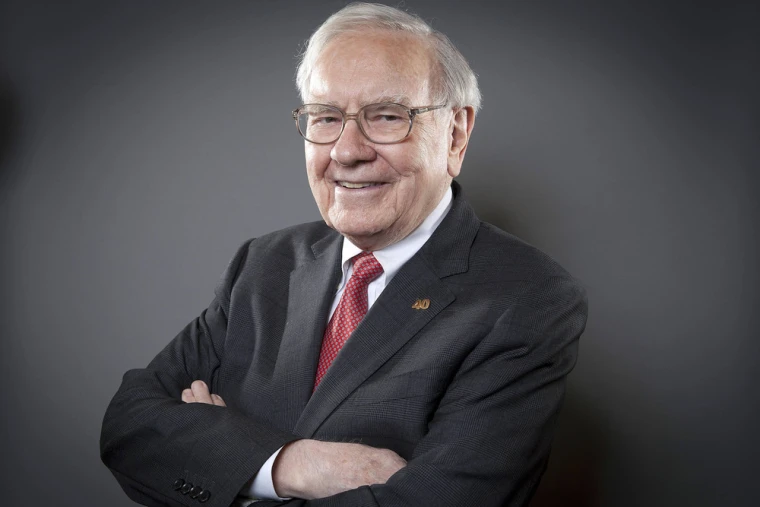
When Warren Buffett stepped down as CEO of Berkshire Hathaway at the end of 2025, the conglomerate was sitting on an enormous pile of cash. By year-end, Berkshire reported more than $370 billion in cash equivalents, most of it parked in Treasury bills.
Buffett, now 95, explained in an interview with Becky Quick for CNBC’s documentary “Warren Buffett: A Life and Legacy” that the massive cash position wasn’t simply the result of becoming more conservative with age. Instead, he said Berkshire’s sheer size makes it difficult to find investments big enough to significantly impact its portfolio. In short, he hadn’t yet come across an opportunity worth deploying such a huge amount of capital.
“It’s external circumstances,” he told Quick. “Believe me, if after we get finished talking you say, ‘I’ve got a great $100 billion new idea.’ I would say, ‘Let’s talk.’”
Despite the large cash reserve, Buffett said he would much rather have the money invested and working to generate higher returns. While cash holdings do earn some interest, he has long favored productive assets like stocks, which have the potential to compound in value over time and outpace inflation.
“It’s at certain levels necessary, but cash is not a good asset,” he said. Buffett compared cash to oxygen in a portfolio — inexpensive and essential, but not particularly exciting. He believes investors should keep some cash available to meet obligations and to act as “dry powder” for attractive opportunities that may arise.
“You do need oxygen, and if you’re ever without it for four or five minutes, you will learn,” Buffett said. “And cash is that way. So you always need to have it available, because you do not know what will happen.”
How to hold cash the Buffett way
While Buffett managed one of the largest investment portfolios in the world at Berkshire Hathaway, his cash dilemma isn’t something most everyday investors experience. Few people have more money than they know how to deploy. Still, his philosophy on managing cash aligns closely with advice many financial professionals give their clients.
Importantly, Buffett does not rush into cash or bonds simply because he believes the market might be overvalued or headed for a downturn. Even as Berkshire’s cash balance grew while waiting for suitable opportunities, he repeatedly emphasized that he would rather remain invested.
“Berkshire shareholders can rest assured that we will forever deploy a substantial majority of their money in equities — mostly American equities although many of these will have international operations of significance,” Buffett wrote in his 2024 shareholder letter. “Berkshire will never prefer ownership of cash-equivalent assets over the ownership of good businesses, whether controlled or only partially owned.”
In that same letter, Buffett also warned that inflation can erode the value of cash and weaken bonds over time. Businesses that produce goods or services people want, however, tend to adapt better to changing economic conditions.
Indeed, between January 1975 and January 2026, the S&P 500 index surged nearly 6,700%, while the Consumer Price Index rose about 524%, according to data analyzed by Charles Schwab.
Buffett has consistently encouraged investors to take a long-term approach by investing regularly in diversified assets. One of his most frequent recommendations is simple and low-cost.
“Consistently buy an S&P 500 low-cost index fund,” Buffett told CNBC in 2017. “I think it’s the thing that makes the most sense practically all of the time.”
Even so, maintaining some cash remains important because the future is unpredictable — something Buffett himself acknowledges.
“I may have read every book in the public library, but I didn’t find the answer then to the question of what the stock market is going to do next week or next month or next year,” Buffett told Quick.
For most investors, financial advisors recommend maintaining an emergency fund equal to three to six months of living expenses. Having that reserve ensures that if an unexpected situation arises — such as losing a job or facing a sudden medical expense — the rest of your financial plan can remain intact.